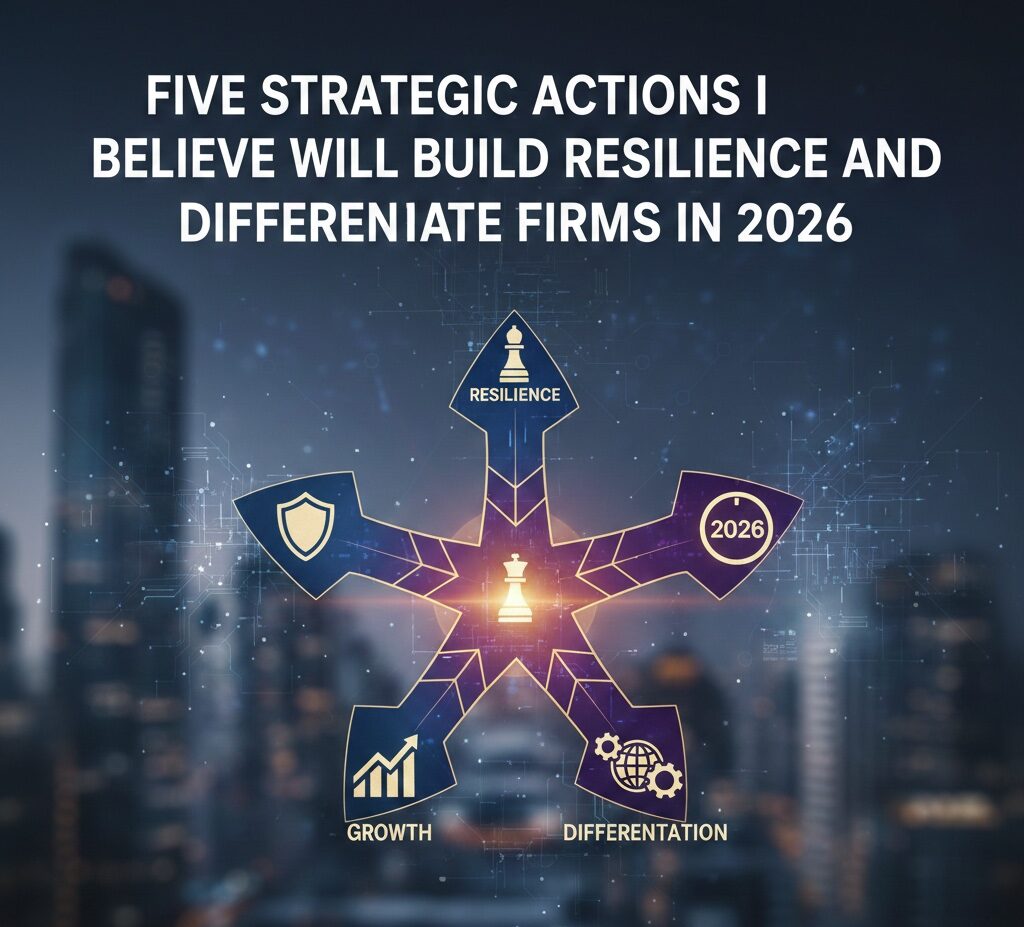
Five HR Strategic Actions I Believe Will Build Resilience and Differentiate Firms in 2026
By Nicola Barry, Co-Founder.
As an HR professional, I’ve learned that resilience is not built during a crisis — it’s built long before one arrives. Looking ahead to 2026, organisations that thrive will be those that have intentionally invested in their people, their culture, and their leadership.
HR is no longer on the sidelines. We are shaping strategy, influencing business outcomes, and helping organisations differentiate themselves in increasingly competitive and uncertain environments.
Based on what I’m seeing across the workforce today, these are the five HR strategic actions I believe every firm should prioritise to build resilience and stand out in 2026.
Shifting From Roles to Skills — and Truly Meaning It: One of the most important changes I see for 2026 is the move away from rigid job structures toward a skills-first workforce. In my experience, organisations become far more resilient when they understand what skills they have — not just what roles people sit in.
As HR leaders, we need to:
Identify the skills critical to future business success
Encourage internal mobility and stretch assignments
Invest in upskilling, not just external hiring
Redefine career progression beyond job titles
When people are allowed to grow and apply their skills in new ways, organisations adapt faster — and employees feel invested in rather than replaced.
Designing Emploee Experience Around Trust, Not Control: If there’s one thing the past few years have taught us, it’s that trust drives performance. In 2026, organisations that differentiate themselves will be those that stop managing presence and start managing outcomes.
From my perspective, this means:
Supporting flexible and hybrid work as a standard, not a perk
Setting clear expectations and trusting people to deliver
Listening more intentionally to employee feedback
Training leaders to lead with empathy and clarity
When employees feel trusted and respected, engagement improves naturally. Resilient cultures are built on relationships — not rules.
Taking Well-Being Seriously — Beyond Initiatives and Campaigns: Well-being is no longer optional, and as HR professionals, we can’t treat it as a side project. I’ve seen firsthand how burnout impacts performance, morale, and retention.
In 2026, well-being must be embedded into how work is designed:
Realistic workloads and capacity planning
Mental health support that’s accessible and stigma-free
Leaders equipped to recognise stress and intervene early
Measuring well-being alongside engagement and turnover
When organisations genuinely care for their people, they don’t just survive challenges — they sustain performance over time.
Using People Data With Purpose, Care, and Transparency: People analytics is one of the most powerful tools HR has — and one of the easiest to misuse. In 2026, trust will be a key differentiator, and that includes how we use employee data.
As HR managers, we must:
Use data to inform decisions, not replace human judgment
Be transparent about what data is collected and why
Establish clear ethical guidelines and governance
Build data literacy within HR teams
When done well, people analytics helps us anticipate risks, plan smarter, and support employees more effectively — without eroding trust.
Developing Leaders Who Can Navigate Uncertainty: In my experience, leadership capability is the single biggest factor in organisational resilience. The firms that will stand out in 2026 are those investing in inclusive, adaptable, and emotionally intelligent leaders.
This means:
Developing leaders at all levels, not just the top
Embedding inclusion, empathy, and accountability into leadership expectations
Planning succession based on potential, not tenure
Supporting leaders with coaching and continuous feedback
Strong leadership creates stability in times of change — and confidence across the workforce.
Final Reflections
As HR professionals, we are in a powerful position. The choices we make today — about skills, culture, leadership, and well-being — will define how resilient our organisations are tomorrow.
In 2026, differentiation won’t come from policies or technology alone. It will come from how well we support, develop, and trust our people.